• Design
  • Video
  • Photo
  • Music
  • Blog
  • Contact
  • Colectivo Piloto
  • Menu

PABLO HERRERA

Creative
  • Design
  • Video
  • Photo
  • Music
  • Blog
  • Contact
  • Colectivo Piloto
Park Bench People

Park Bench People

May 13, 2020 in Film, Photography
“After almost a decade of living in an extraordinarily noisy city, I came to realize how much all that noise was affecting my perception of reality”
— Pablo Herrera

By Pablo Herrera (This article was first published by Colectivo Piloto on May 12, 2020)

I first came to New York City in 2011 to work in the documentary “The Building of A Community” commissioned by the “Museum of Reclaimed Urban Space”, a cultural institution which chronicles the East Village community’s history of grassroots action. The documentary examined the social transformation of the Lower East Side of Manhattan where activists, artists, historians and political representatives describe the neighborhood, the squatters, the community gardens and explain the struggle to save them. For me, it represented a singular way to discover New York City. Let’s be honest, people around the world (and almost all in the rest of the U.S.) know little about how life really is in New York City. Many people may think New York City is Jimmy Fallon, Stephen Colbert, SNL and things like that. Ok, good, but NYC is also tiny and expensive apartments, endless hours of work, high level of competition, pricey restaurants, and thousands of park bench people. This last group are not just NYC's props, they are real people who happen to live on the streets. 

After almost a decade of living in an extraordinarily noisy city, I came to realize how much all that noise was affecting my perception of reality. Today, in times of pandemic we are experiencing NYC with less exciting distractions and more harsh realities. Following my instincts, I decided to grab my old SONY X10 camera and go out there to catch what's happening in the streets. 

I started my route at 14 Street walking down 6th Avenue and then Houston Street to the Lower East Side. I walked nearly 6 miles around the city just to corroborate that the reality is, as I expected, harsh.   

Invisible Numbers

The New York’s Coalition for the Homeless, an advocacy group, reported that about 62,000 people were living in city shelters in January, 60% more than 10 years ago, according to Reuters. Up to today, more than 50 people from the city-run shelter system had died of COVID-19, according to the city’s Department of Social Services. The agency said more than 600 shelter residents and other homeless people – including those living on the streets – had tested positive for the virus so far.

In an interview with Reuters, Giselle Routhier, the group’s policy director, ensures that thousands more are living on the streets and the subways. She states the city hasn’t done enough. The New York’s Coalition for the Homeless wants the city to pay for housing the homeless in some of the thousands of empty hotel rooms in the city.

On April 11, Mayor Bill de Blasio said 6,000 hotel beds would be available for single shelter residents by this week, Reuters informs. Of those beds, 3,500 homeless were already in hotels when the disease struck, and since the outbreak, 1,000 shelter residents have been moved into hotels, including about 500 residents sick with the disease, according to the DSS spokesman Isaac McGinn.

These numbers represent only a fraction of the inequalities in America. Cities like Chicago, San Francisco, Los Angeles, and in southern cities like Austin, the crisis of the homeless has been growing steadily and unstoppably for the last 10 years. The response of the system is, unfortunately, to bet on an unequal system, penalizing the poor for being poor and admiring the rich for enriching themselves through smart tax evasion, wage freezes (the Federal Government has not pass a legislation to increase the minimum wage in over 10 years) and unstoppable family debt growth. The health crisis that we are experiencing these days makes the ‘constantly ignored numbers’ become more visible than ever. It remains to be seen if the ruling class really cares and does something to change it.

A Photo Assignment   

After finishing my tour, I came back home somewhat hopeless, leaving the reel in the camera for several days. It was difficult to review those images and photographs documenting one of the harshest crises that the city has had to face and overcome. Finally, I found the courage in a magnificent piece of music by Nils Frahm. It is not a story within a story that happens in an exciting city, which is how we like to imagine New York City. It is the harsh (and today more than ever inevitable) reality that we have to experience and see on the streets of New York City.
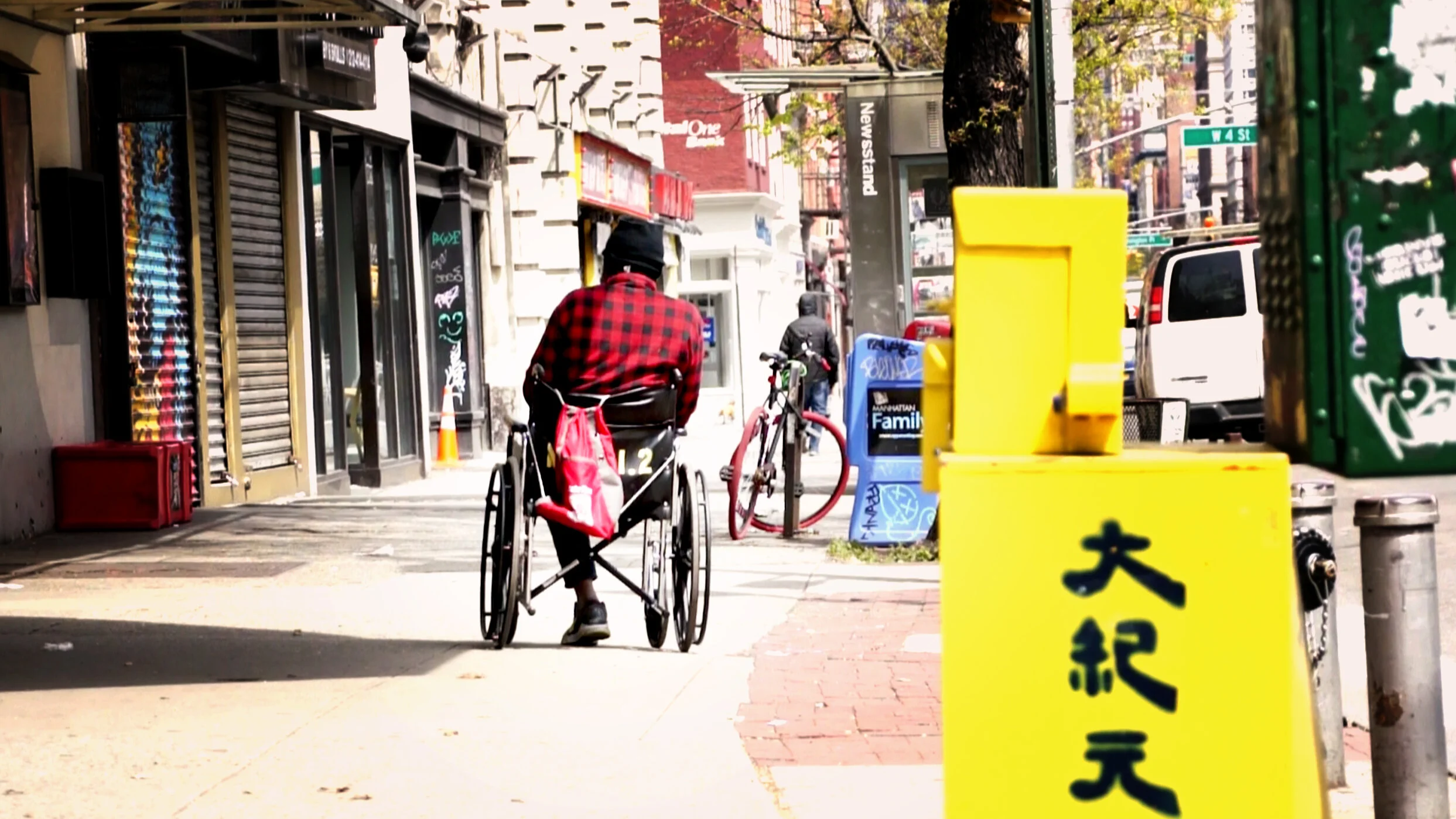
Park Bench People. Photographed and Edited By Pablo Herrera. Music By Nils Nils Frahm.

Source: http://www.colectivopiloto.com/news/park-bench-people/ Tags: Documentary, Photojournalism
Prev / Next

On My Block

Influences on design, architecture, photography, film, literature, painting and beyond


Featured Post

Featured
Designing Innovative Multimedia Programs for K-12
August 12, 2022
Designing Innovative Multimedia Programs for K-12
August 12, 2022

I'm proposing a talk at SXSW EDU 2023 called "Designing Innovative Multimedia Programs for K-12" to introduce the implementation of multimedia programs to foster students' entrepreneurial mindset through inclusive filmmaking practices. You can now vote for my PanelPicker idea through Sunday, August 21.

Read more →
August 12, 2022
NYC, A Return to the 70s
July 5, 2020
NYC, A Return to the 70s
July 5, 2020

Going out with my camera on New York City’s streets these days transports me to the 1970s. When we think about New York City during the seventies, imagery comes to mind of a city undergoing unparalleled transformation fueled by economic collapse and rampant crime. We idealize it as a harsh time for the city but a terrific environment for the emergence of counter culture movements and creativity which has given the city the recognition and name that it has today. While John Cassavetes was taking advantage of this magnificent and contradictory natural set creating films such as Gloria, a new generation of would-be rock stars, artists, dancers, and actors freely walked the streets, squatted, or paid almost no rent.

Read more →
July 5, 2020
Black Lives Matter
June 6, 2020
Black Lives Matter
June 6, 2020

Last Wednesday I was walking the streets of Washington DC armed with my camera on my way to the White House. I was following the protests that for more than 10 days have been marching for justice for George Floyd, a Black man who died after officer Derek Chauvin kneeled on his neck while he was handcuffed on the ground, shouting that he couldn’t breathe. I was waiting for the traffic light to change on the corner of Constitution Avenue and 15th Street when I ran into 3 young women holding signs that read “If You Are Neutral In Situations of Injustice, You Have Chosen the Side of the Oppressor,” “End Police Brutality, Black Lives Matter, No Justice, No Peace!” An African-American driver shouted to the girls “Yeah! Black Lives Matter!” “Shut up! All Lives Matter!” the Black woman sitting in the front snapped at him while smiling at me. But let’s be honest, all lives matter? Of course, but not until Black lives matter.

Read more →
June 6, 2020
Value Beyond Technology
May 22, 2020
Value Beyond Technology
May 22, 2020

During these unprecedented times we are consuming tons of information in articles and webinars debating how we can use technology while approaching educational issues. The problem is that most of those debates focus on the use of technology (medium) instead of considering the best approaches to create engaging content and practices with students through the use of technology. We should start with the content and think of technology as the delivery mechanism. In other words, the content should dictate how the technology is used and not the other way around; technology is not an objective in and of itself. It may seem obvious, but in a society driven by technology it is something easily forgotten.

Read more →
May 22, 2020
Park Bench People
May 13, 2020
Park Bench People
May 13, 2020

By Pablo Herrera (This article was first published by Colectivo Piloto on May 12, 2020)

I first came to New York City in 2011 to work in the documentary “The Building of A Community” commissioned by the “Museum of Reclaimed Urban Space”, a cultural institution which chronicles the East Village community’s history of grassroots action. The documentary examined the social transformation of the Lower East Side of Manhattan where activists, artists, historians and political representatives describe the neighborhood, the squatters, the community gardens and explain the struggle to save them. For me, it represented a singular way to discover New York City. Let’s be honest, people around the world (and almost all in the rest of the U.S.) know little about how life really is in New York City. Many people may think New York City is Jimmy Fallon, Stephen Colbert, SNL and things like that. Ok, good, but NYC is also tiny and expensive apartments, endless hours of work, high level of competition, pricey restaurants, and thousands of park bench people. This last group are not just NYC's props, they are real people who happen to live on the streets.

After almost a decade of living in an extraordinarily noisy city, I came to realize how much all that noise was affecting my perception of reality. Today, in times of pandemic we are experiencing NYC with less exciting distractions and more harsh realities. Following my instincts, I decided to grab my old SONY X10 camera and go out there to catch what's happening in the streets.

I started my route at 14 Street walking down 6th Avenue and then Houston Street to the Lower East Side. I walked nearly 6 miles around the city just to corroborate that the reality is, as I expected, harsh.

Read more →
May 13, 2020
Xin Fang
April 12, 2020
Xin Fang
April 12, 2020

By Pablo Herrera (This interview was first published by Colectivo Piloto on April 12, 2020)

It is not easy to keep optimistically working during the COVID-19 pandemic, especially in a time fraught with uncertainty for those who work as independent filmmakers. But despite the anxiety and incertitude about the future, at Colectivo Piloto we keep doing our best to promote talented young filmmakers by giving them a platform to showcase their work.

It is for this reason that we are excited and proud to release the short documentary “Before He Starts” directed by Xin Fang, a talented young filmmaker from China living in New York City.

“Before He Starts” tells the story of Zhang Hongtu, a Chinese artist who emigrated to the US during the 80’s. His work explores the freedom to criticize the Chinese authorities afforded to an artist living in the West and reflects on themes of authority and belief (specifically the power of iconic imagery) and cross-cultural ‘East and West’ connections. These themes are largely derived from his “outsider” standing as a Muslim in China and, after his move to the United States, as a Chinese citizen in the Western world.

We spoke with Xin Fang about “Before He Starts,” what moves her work as a young documentary filmmaker and how she sees the future as an independent documentary filmmaker during and after these pandemic times.

Read more →
April 12, 2020
Agnès Varda
February 4, 2020
Agnès Varda
February 4, 2020

Read more →
February 4, 2020
Walter Gropius
February 4, 2020
Walter Gropius
February 4, 2020
Read more →
February 4, 2020
Stanley Kubrick
January 28, 2020
Stanley Kubrick
January 28, 2020
Read more →
January 28, 2020
Julio Cortázar
January 16, 2020
Julio Cortázar
January 16, 2020
Read more →
January 16, 2020